At Arnold Mill Primary School we believe in a broad and balanced curriculum, incorporating Early Learning Foundation Stage and the National Curriculum, in a resource rich and stimulating environment. This promotes a positive, challenging, and enjoyable learning experience which meets all our children’s needs and abilities. To enable all our children to enjoy, achieve and develop creative approaches to thinking and learning, the curriculum is delivered through topics and experiential learning opportunities through visits and trips. We also ensure that the children experience a variety of range of enrichment activities such as historians, theatre groups, poets, and musicians.
We strongly believe that children need to develop resilience, social and emotional skills if they are to participate fully in society. It is our awareness of this need which has led to the broad, experiential form of curriculum organisation that we have adopted, and to the inclusion of an extensive Personal, Social and Health Education programme.
Our class teachers are responsible for teaching the curriculum with specialist provision for French, Music, and PE. We offer a range of extracurricular activities which support and motivate children to achieve their full potential in areas such as sport, the arts, computing, and outdoor learning.
Staff at Arnold Mill Primary School have devised an engaging curriculum plan based upon the programmes of study with careful consideration of the needs of our children. We maintain our belief that learning is lifelong and that the skills and attitudes we instil in the early stages of our children’s lives should stand them in good stead for the future.
At Arnold Mill Primary School, all teachers are responsible for providing an inclusive curriculum that is differentiated for those with Special Educational Needs or Disabilities (SEND). We have high expectations for all pupils and are committed to ensuring our curriculum complies with the Equality Act 2010 and the Special Educational Needs and Disability Regulations 2014.
Our inclusion statement emphasises the importance of providing an inclusive learning environment for all pupils including those with SEND. Additional information on this can be found in our SEND Inclusion Policy and Equality Scheme.
Arnold Mill Curriculum Booklet 'Golden Thread'
Our Vision
The ability to communicate is a fundamental part of life. Developing literacy skills (speaking, listening, understanding, reading, and writing) enables children to play a positive and active role in their communities. Equipped with these skills, they can find meaning and participate fully in life’s rich opportunities, developing self-confidence, well-being, and the ability to form positive relationships. Our English curriculum is at the centre of all our practice. In the early years, our focus is on oral language development and comprehension. We aim to develop children’s understanding of language and their spoken vocabulary through real-life, meaningful experiences. We know that those who develop a strong oral language skill in the early years will learn to read well. We consider reading to be a crucial aspect of our curriculum and we aim to instil a love for reading that will remain with our children throughout their lives. We want to equip children with the skills and knowledge necessary for reading through discussion, a systematic teaching approach and regular exposure to high quality literature. It is our intention that through our English curriculum, our children will have opportunities to develop spiritually, culturally, emotionally, intellectually, and socially. Through our nurturing approach and positive relationships, we hope that children will develop their skills in a safe environment, developing the confidence to become successful language users.
Dfe National Curriculum
Reading and Phonics at AMPS
The Phonics scheme we use is Read Write Inc. This is used from Foundation and throughout KS1. In Year 1 children take a Phonics Screening Test which is done throughout the country. These checks allow us to support children's reading levels.
Reading at Home
Foundation stage
Children in Foundation stage will choose a share at home story book and once the children are ready, they will also bring home a reading book that matches their phonic ability. The children will get a new book on their book change day. Please read with your child at least three times a week and sign their diaries so that they can work towards their reading pins. Reading could include bedtime stories as well as the books they bring home from school.
Key Stage One
Children in KS1 have two reading books. Their Read! Write! book and a share at home book. During the week they will have been learning to read their Read! Write! book so that they can read this to you with confidence and expression. Their share at home book is one you can read together. Both books will be changed on a Friday. Please read at least three times a week. When you have read with your child please write it in their diaries, then they can work towards their reading pins. We’d also love to know what you are reading for pleasure, so feel free to share that with us in their diaries as well.
Key Stage Two
Children in KS2 will be coming home with two books; one book is a book of their choice; the other is an allocated Banded Reading Book (chosen to stretch their reading ability, it will be easy to spot as it will have a bright, coloured sticker on the spine). The banded book is selected after a one-to-one assessment and plays a vital role in tailoring your child’s reading experience, ensuring they are matched with appropriate content that aligns with their skill level. Please read the banded book with the sticker with your child for 5–10 minutes at least three times a week so that they can earn their reading pins.
Policies and Skills Progression
Spelling, Punctuation and Grammar
At Arnold Mill Primary School we use Spelling Shed to support the children with the spelling patterns and rules that they need to know to be successful in their learning. All children have a login to the Ed Shed and assignments are set weekly online to support. We do weekly spelling tests and quizzes to support this.
In every lesson at Arnold Mill we teach a Grammar Revisit element to support the prior knowledge of children's grammar knowledge. As part of an English lesson children are exposed to grammar elements throughout their learning sequence to ensure this is then seen in their writing consistently.
We do termly assessments to track children's progress.
What is SPAG?

Read! Write! is a rapid learn to read programme that enables children to read to learn for the rest of their lives.
“When children can’t read there is low self esteem. We want them to be reading with confidence, to be able to read quite sophisticated texts at an early age.” Ruth Miskin – former headteacher and creator of RWI phonics.
At Arnold Mill we use RWInc to teach children the fundamentals of reading. It is used in Foundation Stage and Key Stage 1 to teach the skills of reading and support them in their reading journey..
 Read! Write! at Home.
There are some fantastic links below to help you support your child's learning at home.
Guidance for Parents.
Pure Sounds
A guide to annunciating each sound clearly and correctly.
-
Parent's pages: Your guide to phonics
These short films are really good and explain what we are doing in school.
Read! Write! Parents evening
Handwriting prompts
Speed Sound Charts
Year 1 Screening Check Information
Have a look below at our guidance for Parents.
Any other questions please see a member of the KS1 team.
Phonics Screening Check guidance for parents
-
National Curriculum: Programmes of study for English
We follow the National curriculum for English. Click here to see the statutory requirements for the teaching of English
Mathematics at Arnold Mill
‘We believe learning transforms lives’
Arnold Mill is an inclusive school where everyone is encouraged to fulfil their potential, discover new talents and develop a love of learning.
Our Vision for Mathematics:
Mathematics is a key part of everyday life. From the moment we wake up, we need to be able to tackle problems, be fluent with numbers and understand spatial awareness. We believe that children who view themselves as mathematicians will be able to function independently in the world. Research shows that children’s chances of success are maximized if they develop deep and lasting understanding of mathematical procedures and concepts.
Mathematics is woven through our school day as a natural part of our timetable and continuous provision (FS & KS1). We aim to ‘hardwire’ number facts by teaching our children small steps. Application of these facts in different contexts allows the working memory to think creatively to solve problems (mastery curriculum). Through praise, we create a culture in which every child develops the self-belief to master mathematics and the resilience to solve problems.
Careful planning based on children’s individual needs allows them to master small steps, creating a deep understanding of mathematics. We encourage the children to use their own mathematical graphics to represent their enquiries and ideas, particularly when problem solving. We teach our children to build endurance, develop language skills and foster a curiosity and passion for mathematics ready to tackle problems and utilise the key skills manifested throughout their schooling.
At Arnold Mill we follow the White Rose scheme of work for UKS2 and follow the NCETM Curriculum Prioritisation materials for the rest of the school. This is where we get our objectives from and is the path that we take to ensure ALL children can achieve their maximum potential.
Contact details:
If you have any queries regarding mathematics at Arnold Mill. Please contact our subject leads via the emails below.
Thomas Robinson: trobinson@arnoldmill.notts.sch.uk
Georgia Dibley: gdibley@arnoldmill.notts.sch.uk
Maths Policy
Useful Links
-
NCETM - Mastery home page
Teaching for mastery home page.
-
NCETM - Curriculum Prioritisation
Link to how the maths curriculum is structured for Year groups 1-4 at Arnold Mill.
-
White Rose Education
Follow the link then look at Maths curriculum resources for Year 5/6 curriculum prioritisation at Arnold Mill.
-
Times Table Rock Stars
A resource used to support the children with their times table skills. Parents - children in years 3-6 will have a login for this.
STEM Showcase Poster
Science is about developing children's ideas and ways of working that enable them to make sense of the world in which they live through investigation, as well as using and applying process skills.
At Arnold Mill we aim to:
- Prepare children for a life in an increasingly scientific and technological world.
- Help children acquire a growing understanding of scientific ideas.
- Provide opportunities for children to acquire practical scientific skills.
- Develop the skills of investigation- including observing, measuring, predicting, hypothesising, experimenting, communicating, interpreting, explaining and evaluating.
- Develop each child's understanding of scientific concepts and their ability to apply them in everyday contexts.
- Foster concern about, and active care for, our environment.
- Encourage children to ask and answer scientific questions.
- Provide children with an enjoyable experience of science.
- Build on children's natural curiosity and develop a scientific approach to problems.
Science Curriculum
We offer the children a broad and balanced curriculum which builds on their knowledge, skills and understanding of science each year. They will leave Arnold Mill and will be able to apply their knowledge and understanding of scientific ideas to familiar phenomena, everyday things and their personal health.
Science Policy
At Arnold Mill Primary School we believe that computational thinking is vital in helping children to solve problems, design systems, and understand the power and limits of human and machine intelligence. We believe it is a skill that empowers, and one that all pupils should be aware of and develop competence in. Pupils who can think computationally are better able to conceptualise, understand and use computer-based technology, and so are better prepared for today’s world and future.
Our Vision
-
Children will understand and apply the fundamental principles and concepts of computer science, including abstraction, logic, algorithms and data representation.
-
Children will be able to evaluate and apply information technology, including new or unfamiliar technologies, analytically to solve problems.
-
Pupils will be equipped to use information technology to create programs, systems and a range of content.
-
We aim to ensure that children are responsible, competent, confident and creative users of information and communication technology.
-
Children will become independent and skilful users of digital technology and will be outward looking and forward thinking in this technological age.
-
To equip all learners with the experiences and skills of computing that they will use in a rapidly changing technological world and to engage children through enriched multi-media learning experiences.
-
We aim to ensure that teachers develop confidence and competence to use digital technology in the effective teaching of their subject.
-
Children will become digitally literate. They will be able to use, and express themselves and develop their ideas through, information and communication technology, at a level suitable for future workplace and as active participants in a digital world.
“A high quality computing education equips pupils to understand and change the world through computational thinking. It develops and requires logical thinking and precision. It combines creativity with rigour: pupils apply underlying principles to understand real-world systems, and to create purposeful and usable artefacts,”
Computing Curriculum, Programmes of Study, 2013
Information and communication technology is an integral part of the national curriculum and is a key skill for everyday life. Computers, tablets, programmable robots, digital and video cameras are a few of the tools that can be used to acquire, organise, store, manipulate, interpret, communicate and present information. At Arnold Mill Primary School we recognise that pupils are entitled to quality hardware and software and a structured and progressive approach to the learning of the skills needed to enable them to use it effectively.
The aims of ICT are to enable children to:
-
Become creative, logical, critical thinkers, who reason systematically and work collaboratively. Risk taking and innovation will be enriched through the computer science.
-
Analyse problems in computational terms, and have repeated practical experience of writing computer programs in order to solve such problems.
-
Appreciate the relevance of digital literacy in our society and that they see it as an essential tool for learning, communication, finding information and for controlling and understanding their environment.
-
To explore their attitudes towards computing and its value to them. For example, to learn about issues of security, confidentiality and accuracy. As children‛s confidence grows they will be able to make informed and discerning choices about their use of information technology.
To find out more about the Computing Curriculum at Arnold Mill, please find the Computing Curriculum Vision Statement below.
Software used in school
MIT's Scratch - Developed to help introduce learners to the world of coding, Scratch is a GUI (Graphic User Interface) based programming language. Pupils in KS2 will start to use Scratch to develop their own computer games of increasing complexity which draw upon fundamental aspects of programming such as variables, loops and conditions. Click here to download it for free.
Kodu – Microsoft have developed Kodu, which allows pupils to program their own games within their own 3D worlds which they can sculpt using the landscape building tool. Key coding concepts such as loops, conditions and variables are incorporated. Kodu can be download free from http://www.kodugamelab.com
Useful Subject Knowledge
Algorithm - An algorithm is a precisely defined procedure- a sequence of instructions, or a set of rules, for performing a specific task (e.g instructions for making a sandwich).
Control - Using computers to mover or otherwise change 'physical' systems. The computer can be hidden inside the system or connected to it.
Data - A structured set of numbers, representing digitised text, images, sound or video, which can be processed or transmitted by a computer.
Debug - To detect and correct the errors in a computer program.
Digital content - Any media created, edited or viewed on a computer, such as text, images, sound, video or virtual environments, and combinations of these (i.e multimedia)
Input - Data provided to a computer system, such as via a keyboard, mouse, microphone, camera or physical sensors.
Output - The information produced by a computer system for its user, typically on a screen, through speakers or on a printer, but possibly through the control of motors in physical systems.
Program - A stored set of instructions encoded in a language understood by the computer that processes input to generate an output.
Sequence - To place programming instructions in order, with each executed one after the other.
Simulation - Using a computer to model the state and behaviour of real-world or imaginary systems, including physical and social systems; an integral part of most computer games.
Variables - A way in which computer programs can store, retrieve or change simple data, such as a score, the time left, or the user's name.
Religious Education

Religious Education enables children to investigate and reflect on some of the most fundamental questions asked by people. At Arnold Mill Primary School, we deliver an engaging plural, fun and spiritually engaging curriculum which allows children to develop and deepen their knowledge and understanding of the major world faiths. We provide opportunities for children to ask and reflect on challenging questions about the meaning and purpose of life, beliefs, the self, issues of right and wrong and what it means to be human. We enable children to develop a sound knowledge not only of Christianity but also of other world religions in relation to values. Children reflect on what it means to have a faith and develop their own spiritual knowledge and understanding. We help the children to learn from religions as well as about religions.
Our Vision
Through the teaching of Religious Education we aim to:
- Develop moral and social understanding through exploring the concepts of religion and belief and their roles in the spiritual, moral and cultural lives of the people in our society
- Develop an awareness of spiritual and moral issues in life experiences
- Develop an understanding of religious traditions and to appreciate and respect the cultural differences in Britain today
- Prepare pupils for life in modern, diverse Britain
- Develop knowledge and understanding of Christianity and other major world religions and value systems found in Britain
- Have an understanding of what it means to be committed to a religious tradition
- Provide opportunities to promote an ethos of respect for others, challenge stereotypes, celebrate diversity and build an understanding of other cultures and beliefs
- Be able to reflect on own experiences and to develop a personal response to the fundamental questions of life
RE Policy
Religious Education Curriculum
During their time at Arnold Mill, your child will learn about the six main religions (Christianity, Islam, Sikhism, Judaism, Hinduism and Buddhism) and be encouraged to explore and question their own beliefs in light of what they learn.
Our teaching of Religious Education follows the guidance given in the latest Agreed
Syllabus for Nottingham City and Nottinghamshire:-
Religious Education for All
The Agreed Syllabus for RE in Nottingham City and Nottinghamshire
2021-2026
Using this Agreed Syllabus for Religious Education, we will enable our pupils to discover more about religion as well as other world views as we assist them to apply their learning to a range of topics. Our pupils are encouraged to express ideas and insights into key questions which face all human beings as we travel through life. They will take part in lessons, and could also receive visitors to school sharing a range of religious viewpoints and undertake their own visits to varied places of worship, Covid permitting.
Through these experiences they will gain insights and knowledge to help equip them as responsible citizens, ready to contribute positively to our society and the wider world.
The three-fold aims of RE in Nottingham City and the County will ensure that our pupils:
- Know and understand a range of religions and world views which will allow them to recognise the diversity which exists in our city and wider society.
- Can express ideas and insights about the nature, significance and the impact of religions and world views as they develop their own personal views on a range of issues
- Develop and use skills which will assist them to engage seriously with religions and world views
By following the Agreed Syllabus, RE will also contribute to a whole range of school priorities. Study of religious and world views will also promote spiritual, cultural, social and moral development, and will support pupils’ understanding of British Values such as acceptance and respect for others who hold different world views.
If you would like to know more about the Agreed Syllabus a copy can be made available for you to read in school. Please contact Kelly Broniewska (kmyland@arnoldmill.notts.sch.uk) for more information
Curriculum Overview
To find out more about the RE curriculum at Arnold Mill, take a look at the curriculum overviews for each Key Stage.
RE Around School
PE & Sport Provision - "Believe & Achieve"
Welcome to another exciting year of sport ahead at Arnold Mill Primary School. Our vision as a school is to provide our pupils with the very best education in all aspects of learning and this is certainly the case within our pupils PE lessons.
Intent Statement:
The early years of a child’s life are central to their growth and development. This applies to their physical development as much as any other area. One of the greatest benefits of physical education (PE) is that it improves children’s physical and mental health at the same time.
Children who are involved in regular PE are much more likely to have better physical health when compared to those who don’t. We aim to offer a PE curriculum that ensures our children grow strong muscles and bones, with lots of opportunities for outdoor learning and physical activity such as: pushing, climbing, running and jumping. We encourage them to have at least an hour of vigorous physical activity every day through specific lessons, access to outdoor provision and active break-times to improve cardiovascular health and wellbeing.
We also know that PE also has the potential to greatly boost children’s memories, improve their concentration and support the development of positive mental health. Our PE curriculum encourages children to challenge themselves, improve their own performance and to work as a team in competitive sports; signposting them to outside agencies to nurture their development even further.
We want our children to discover a love for sports and talents at an early age and receive the support they need to develop them. If these talents are well taken care of many children will remain active, giving them a love of sporting activity into adulthood.
PE Curriculum - Skills Progression
Extra-Curricular
We also offer an extensive range of after-school and lunchtime clubs, to further enhance their participation and enjoyment of sport.
Sports Leaders
Some pupils in KS2 apply and are successful in being given the opportunity to be an Arnold Mill Sports Leader. They receive training and support in the theory and practicalities of leading groups in sport. The ultimate aim of the group is for them to lead sessions to other pupils in school during breaks, lunch times, after-school and during PE lessons.
They are also a key part of our Intra-School compeitions and challenges. Planning and delivering a number of events throughout the year.
Art, craft and design embody some of the highest forms of human creativity. A high-quality art and design education should engage, inspire and challenge pupils, equipping them with the knowledge and skills to experiment, invent and create their own works of art, craft and design. As pupils progress, they should be able to think critically and develop a more rigorous understanding of art and design. They should also know how art and design both reflect and shape our history, and contribute to the culture, creativity and wealth of our nation.
Aims
- produce creative work, exploring their ideas and recording their experiences
- become proficient in drawing, painting, sculpture and other art, craft and design techniques
- evaluate and analyse creative works using the language of art, craft and design
- know about great artists, craft makers and designers, and understand the historical and cultural development of their art forms.
Art Awards (July 2025)
Congratulations to all of our amazing artists!
History fires children’s curiosity about the past in Britain and the wider world and helps them to understand the diversity of human experience. It provides them with the ability to empathise with others, argue a point of view and reach their own conclusions - essential skills that are prized in adult life.
At Arnold Mill we aim to:
- Develop a broad historical and cultural awareness in children.
- Provide opportunities for children to develop a chronological framework by investigating the past and how it influences the present.
- Encourage children to interrogate evidence and form their own opinions.
- Enable children to communicate their view points in a variety of ways using appropriate vocabulary.
- Explore a range of sources of information.
- Foster enjoyment, empathy and curiosity for finding out about the past.
We offer the children a broad and balanced curriculum which builds on their knowledge, skills and understanding of history each year. Through the use of visitors & visits, drama and historical evidence, children will leave Arnold Mill with understanding of how beliefs and cultures affect people's actions. They will also have a chronological framework for their knowledge of significant events and people.

To find out more details about Arnold Mill's History Curriculum, open the document below
Geography provokes and answers questions about the natural and human worlds. It is a focus within the curriculum for developing cultural awareness, understanding and resolving issues about the environment and recognising the importance of sustainable development. It can inspire children to think about their own place in the world, their values, and their rights and responsibilities to other people and the environment.
At Arnold Mill we aim to:
- Develop a broad geographical and cultural awareness in children of globally significant places.
- Provide opportunities for children to undertake geographical enquiry and skills by investigating and expressing their own views about people, places and environments, both in and outside the classroom.
- Enable children to communicate their view points in a variety of ways using appropriate vocabulary.
- Encourage children to collect and analyse evidence and draw conclusions.
- Explore a range of sources of information.
- Foster enjoyment, satisfaction and curiosity for finding out about places, patterns and processes.

Geography Curriculum
We offer the children a broad and balanced curriculum which builds on their knowledge, skills and understanding of geography each year. Through the use of visitors and visits, drama and role-play, children will leave Arnold Mill with the knowledge of places and environments throughout the world and will develop an understanding of how people affect the environment. They will also build on a range of investigative and problem solving skills both inside and outside the classroom.
To find out more details about Arnold Mill's Geography Curriculum, open the documents below.
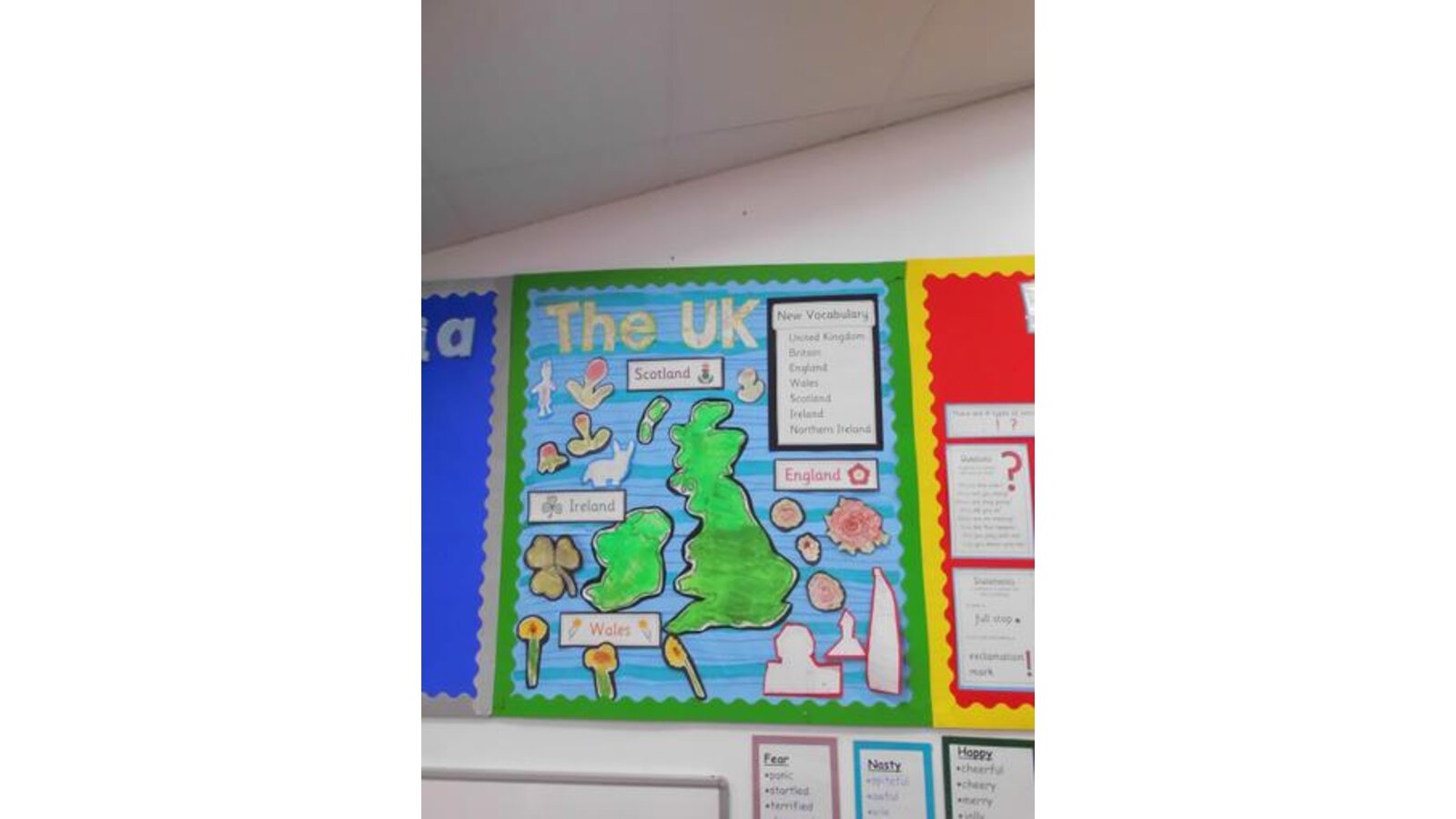
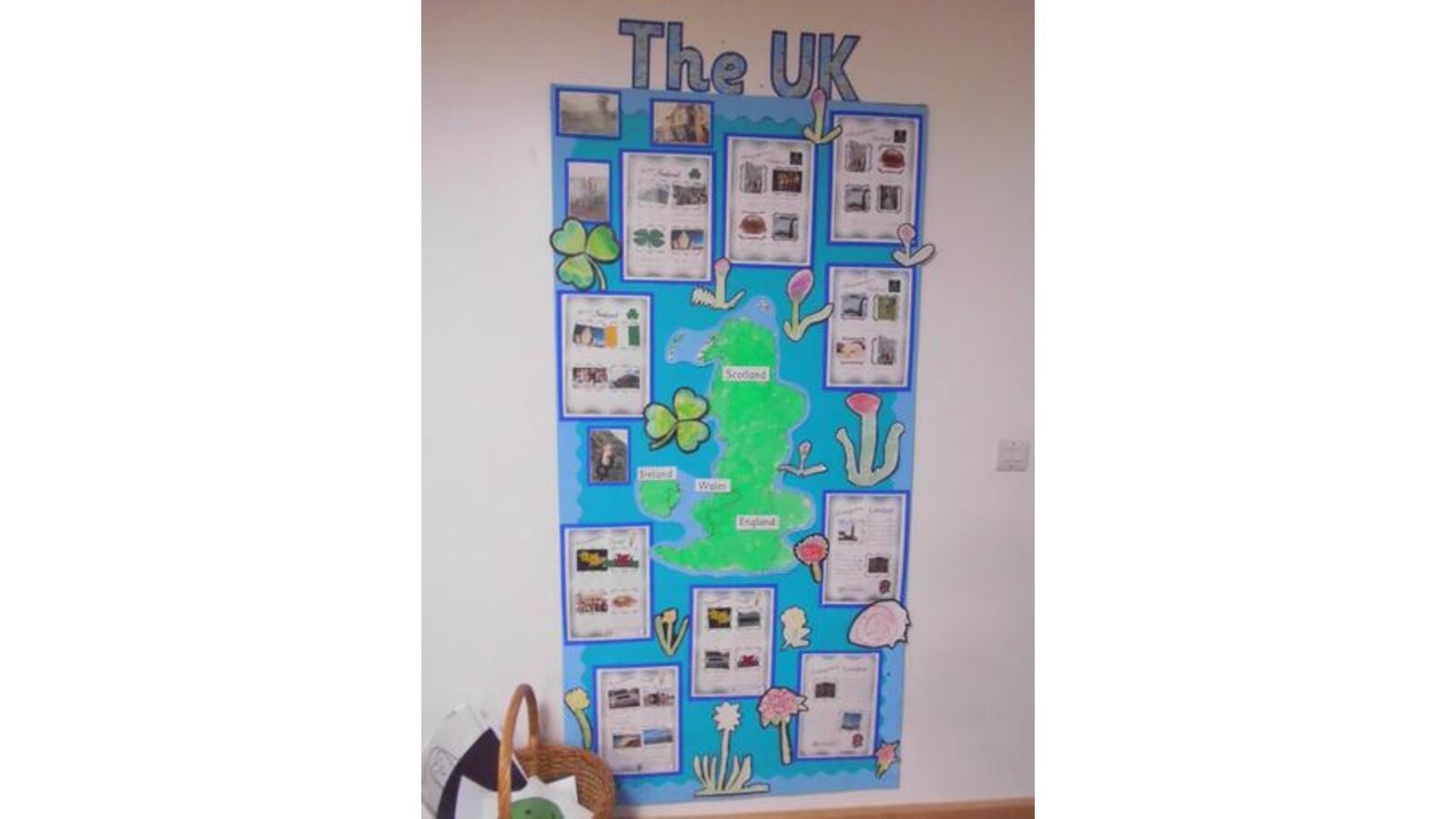
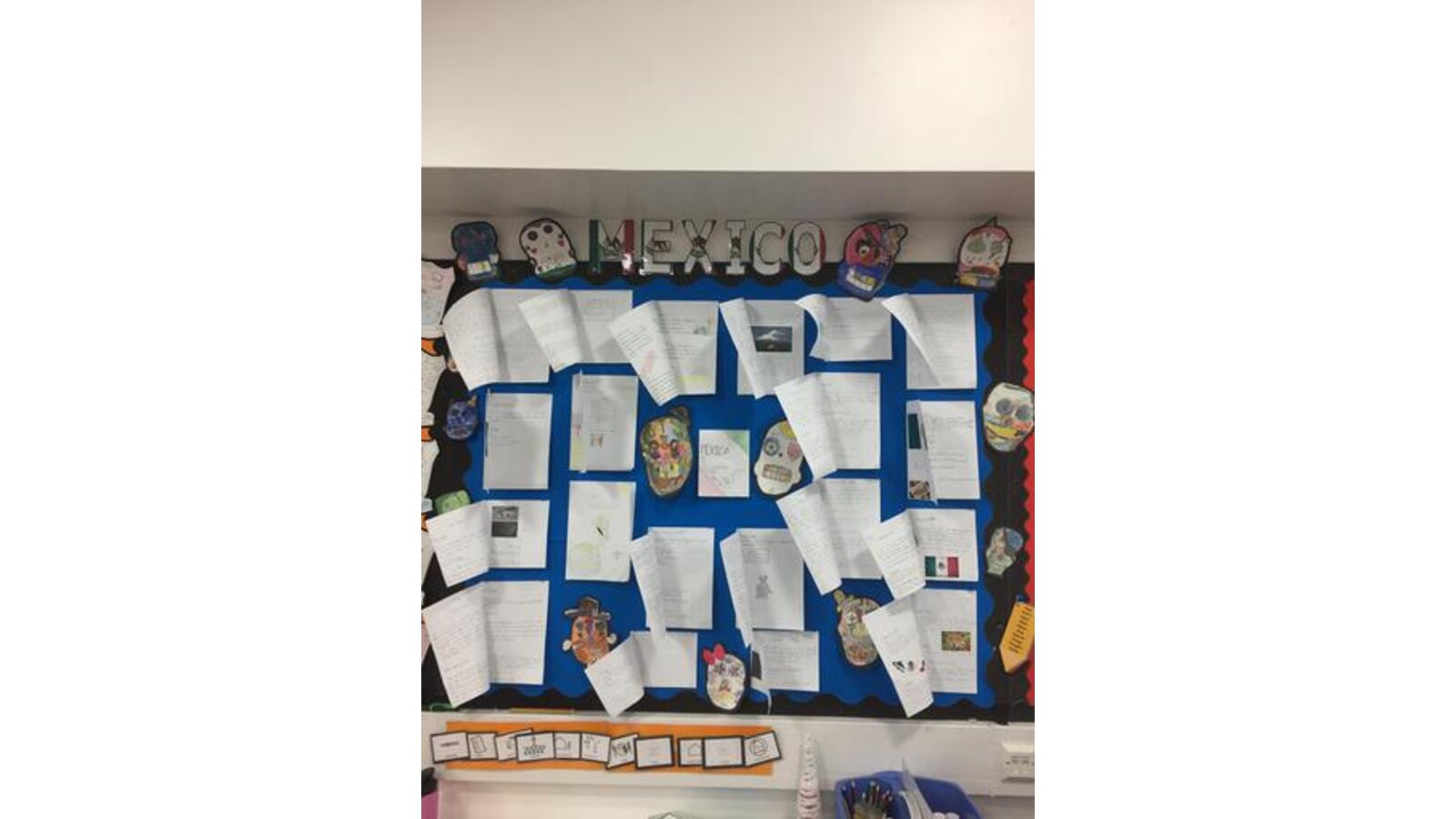
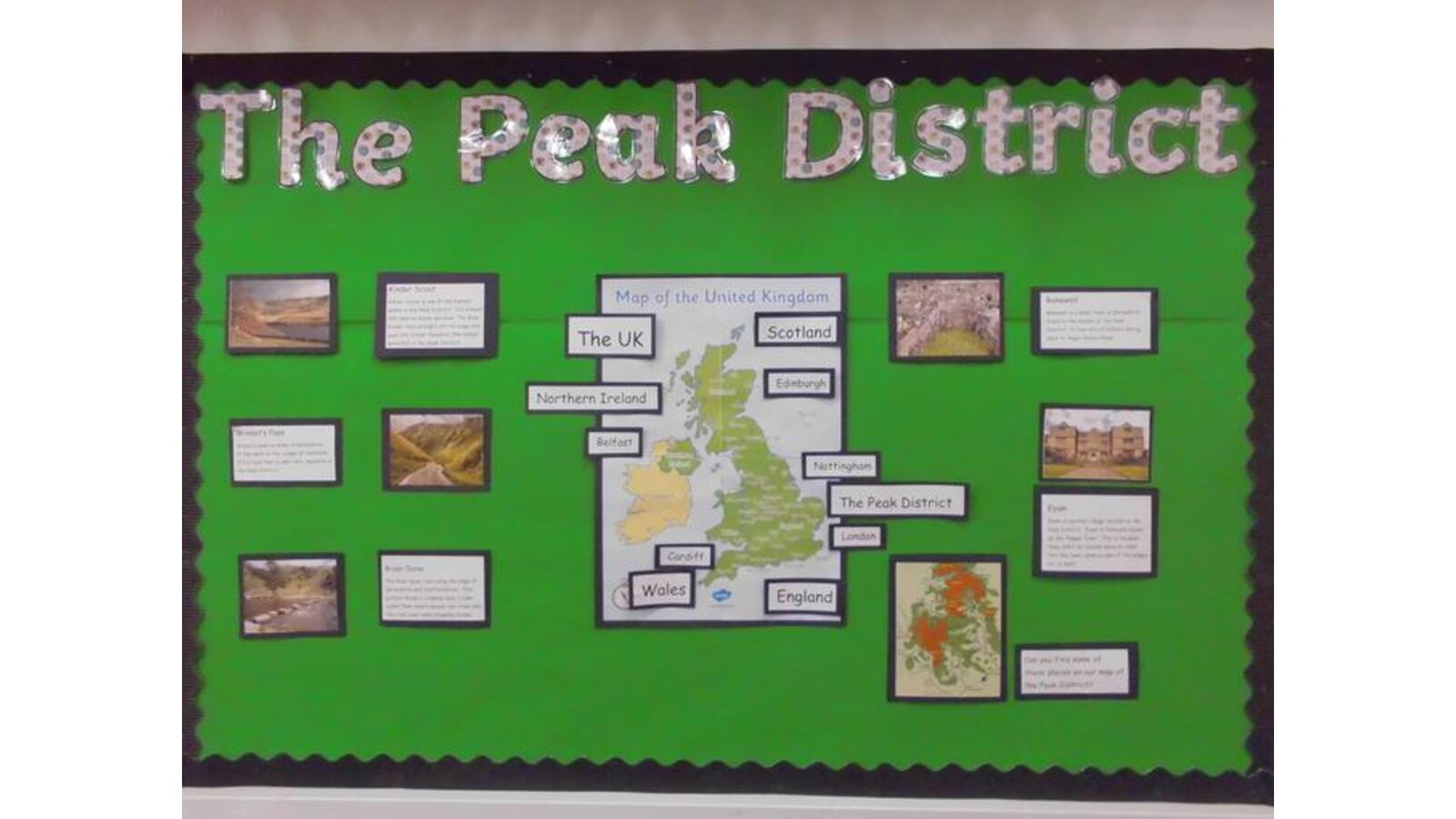
Geography displays across school

Overview
|
Detail |
Information |
|
Academic year that this summary covers |
2024/25 |
|
Date this summary was published |
21/11/2024 |
|
Date this summary will be reviewed |
July 2024 |
|
Name of the school music lead |
Joseph Phillips-Alexander |
|
Name of local music hub |
Nottinghamshire Music Hub |
|
Name of other music education organisation(s) (if partnership in place) |
We Create Music |
This is a summary of how our school delivers music education to all our pupils across three areas – curriculum music, co-curricular provision and musical experiences – and what changes we are planning in future years. This information is to help pupils and parents or carers understand what our school offers and who we work with to support our pupils’ music education.
Part A: Curriculum music
This is about what we teach in lesson time and how much time is spent teaching music.
From September 2024, Arnold Mill have started following the Sing Up scheme of music. Previously, children were taught using the Charanga scheme of music. We hope that by switching to Sing Up, we will increase our children's enjoyment and depth of knowledge in music.
What is Sing Up’s intention for Sing Up Music?
Sing Up aims for every child to have access to high-quality, practical, and engaging musical experiences through our pupil and teacher resources.
We want all children to develop the self-confidence, skills, knowledge, and understanding to develop a lifelong love of music, whilst also providing a secure foundation that enables them to take music further should they wish to. With each unit and every lesson plan, our aim is to provide great teaching resources and clear delivery guidance that saves teachers time, supports their subject knowledge, and gives them confidence in teaching music practically.
Sing Up Music is designed and written by subject specialists. It sets out the skills, knowledge, and understanding to be gained by all pupils at each stage of learning, including the Early Years Foundation Stage. Sing Up units represent are a library of resources that meet the requirements of the National Curriculum for Music, the suggested approaches of the Model Music Curriculum, as well as the Statutory Framework for Early Years Foundation Stage and Music Development Matters. We also believe that a music curriculum should draw on a broad range of musical traditions, using authentic songs and materials, and have followed this approach when creating Sing Up Music. Our school music curriculum ins informed but the non-statutory model music curriculum, published buy the DFE in 2021.
When do pupils learn music?
In EYFS, nursery children learn through song throughout the day. Sing Up have a variety of songs and activities, which staff can dip into and revisit. In F2, music lessons are around 30 minutes per week. In the run up to Christmas, children spend time rehearsing songs for the nativity. Staff in foundation also plan musical activities for pupils to access through continuous provision.
In key stage one, music is taught for 40 minutes per week. In key stage two, pupils learn music for an hour per week, alternating with french lessons every half-term.
Pupils have the opportunity to sing in most lessons. Pupils play an array of tuned and untuned percussion in music lessons. Pupils focus on playing glockenspiel and xylophone in years 3 and 4. Pupils revisit these instruments throughout years 5 and 6
Music for SEND pupils
We aim for SEND pupils to be included in all music lessons. Staff have high expectations of pupils in music lessons. Staff consider how music lessons may be challenging for pupils with sensory needs and make appropriate adjustments. Staff have the opportunity to differentiate for SEND pupils, for example using chime bars rather than a glockenspiel as chime bars have a lower cognitive demand. Our aim is always for SEND pupils to be included, enjoy music lessons and make progress.
Part B: Co-curricular music
This is about opportunities for pupils to sing and play music, outside of lesson time, including choirs, ensembles and bands, and how pupils can make progress in music beyond the core curriculum.
The following clubs are free after-school clubs, which are run by school staff:
- Recorder club- medium sized group for KS2 pupils
- Choir club- medium sized group for all pupils
- Percussion club- medium group for KS2 pupils (xylophone, glockenspiel, untuned percussion)
Club sign up forms are sent out half-termly via the school newsletter.
The following clubs are run by outside providers. These lessons are paid for by parents and lessons run during the school day:
- Guitar lessons small group tuition from an external provider (Create Music). Flyers are sent out at points throughout the year to offer free taster lessons and offer pupils the chance to sign up.
- Piano lessons one-to-one and one-to-two lessons. Lessons are taught by the parent of a former pupil. Piano lessons are currently at capacity and we are not offering new sign ups at the moment.
Other instrumental lessons:
We have discontinued drumming lessons due to low sign-up numbers. We review extra-curricular music lessons from outside providers yearly and we aim to offer lessons when there is significant interest.
Part C: Musical experiences
This is about all the other musical events and opportunities that we organise, such as singing in assembly, concerts and shows, and trips to professional concerts.
Assemblies
Children at Arnold Mill sing every day at the start and end of every assembly. There are also weekly singing assembly on Wednesdays, where we practice school favourites and introduce new songs. We have a yearly music celebration assembly, in which pupils from each phase are nominated for an award based on their enthusiasm or ability in music lessons.
School performances
At Christmas there are three performances. Foundation and key stage 1 each perform their own Christmas nativities. Key stage two perform a Christmas concert outside for parents. Usually we sing contemporary and popular Christmas songs but this year we have opted to sing some good old-fashioned Christmas carols. In the Summer term, year six rehearse and perform and end of year musical.
Live music
Over the past two years, Arnold Mill has run a trip in the Summer term to see the Hallé orchestra at the Royal Concert Hall in Nottingham. The children enjoyed the trip and we intend to make this a yearly trip for year three pupils. The performance by the Hallé orchestra also includes some participation as the school is sent songs to practice in advance.
We aim to have one live performance in school per year. Last year, we were visited by Red Hill Academy's swing band which our pupils really enjoyed. This year we aim to have a live performance from a local band in the Summer term.
In the future
This is about what the school is planning for subsequent years.
- Evaluate the effectiveness of our music curriculum. Elevate our pupils' musical knowledge, skills and cultural capital.
- Offer new co-curricular music activities. Send out questionnaires to parents to gauge interest yearly.
-
Music education: information for parents and young people
Advice from the Department for Education
Curriculum maps
Unit overviews
Language Learning
Learning another language provides a valuable educational, social and cultural experience. It gives children opportunities to practise specific language skills and to develop respect for languages and cultures other than their own. A high quality languages education should foster children’s curiosity and deepen their understanding of the world.
The National Curriculum for Languages aims to ensure that all pupils:
- understand and respond to spoken and written language from a variety of authentic source
- speak with increasing confidence, fluency and spontaneity, finding ways of communicating what they want to say, including through discussion and asking questions, and continually improving the accuracy of their pronunciation and intonation
- can write at varying length, for different purposes and audiences, using the variety of grammatical structures that they have learnt
- discover and develop an appreciation of a range of writing in the language studied.
Intent
At Arnold Mill our chosen language is French. The intention of our MFL teaching is that children will be taught French in a way which is exciting, stimulating and encourages curiosity. We strive to develop children’s confidence so that they enjoy exploring new language and feel comfortable to ‘have a go’. Children receive praise and encouragement which in turn motivates them to keep exploring the conventions of the target language and ultimately prepare them for transition into Key Stage 3. We aim to develop skills of listening, speaking, reading and writing through a framework of progression so that competence in each skill expands over time. These skills enable children to use and apply their French learning in a variety of contexts and lay foundations for future language learning.
Implementation
Children in Years 3 to 6 receive French lessons in half-termly blocks. Our scheme of work is based around the Key Stage 2 Framework for Languages and we organise our teaching into topics, one per year group, per term. As children move through school there are steps of progression for the skills of listening, speaking, reading, writing and grammar according to year group. Planning is in line with the requirements of the National Curriculum which states that:
Pupils should be taught to:
- listen attentively to spoken language and show understanding by joining in and responding
- explore the patterns and sounds of language through songs and rhymes and link the spelling, sound and meaning of words
- engage in conversations; ask and answer questions; express opinions and respond to those of others; seek clarification and help*
- speak in sentences, using familiar vocabulary, phrases and basic language structures
- develop accurate pronunciation and intonation so that others understand when they are reading aloud or using familiar words and phrases
- present ideas and information orally to a range of audiences
- read carefully and show understanding of words, phrases and simple writing
- appreciate stories, songs, poems and rhymes in the language
- broaden their vocabulary and develop their ability to understand new words that are introduced into familiar written material, including through using a dictionary
- write phrases from memory, and adapt these to create new sentences, to express ideas clearly
- describe people, places, things and actions orally and in writing
Children are encouraged and supported to develop their speaking and listening skills through questioning, conversation with adults and peers, songs and games.
Written work is recorded in individual books. This may be in the form of pictures, phrases or sentences. Children are encouraged to self-assess and reflect upon next steps. The language teacher assesses each child’s progress at the end of each term as happens with other foundation subjects.
Displays are used to showcase work and share it with the whole school community.
Impact
Learning in French is monitored by the subject co-ordinator through:
- Carefully directed questioning and observations of children’s involvement and understanding in lessons
- Close liaison with teaching assistants who provide valuable support in learning time
- Book scrutinies
- Pupil interviews and questionnaires
Ideas for supporting your child with their language acquisition and cultural appreciation
- Look out for where French words are used in an English context, for example on retail products ‘croissant’, ‘fromage frais’ etc
- Borrow some books about France or simple French storybooks from the library
- If you happen to visit a museum, look out for paintings by French artists e.g. Monet, Renoir, Dégas
- Listen to some French music on YouTube. This could be background ‘café’ music or specific pieces by French composers such as Saint-Saens, Debussy, Chopin to name a few!
- Download some printable French crosswords and wordsearches so your child can practise saying, reading and spelling some French vocabulary.
Policy, Skills & Curriculum
Knowledge Organisers
- Year 3 Autumn Knowledge Organiser.pub
- Year 4 Autumn Knowledge Organiser.pub
- Year 5 Autumn Knowledge Organiser.pub
- Year 6 Autumn Knowledge Organiser.pub
- Year 3 Spring Knowledge Organiser.pub
- Year 4 Spring Knowledge Organiser.pub
- Year 5 Spring Knowledge Organiser.pub
- Year 6 Spring Knowledge Organiser.pub
PSHE (Personal, Social, Health, Emotional)
Arnold Mill is a nurturing learning environment in which children are encouraged to develop their full potential. Our visions and values are at the core of everything we do. They underpin our teaching and learning and provide an environment that will enable our children to lead happy, safe and fulfilling lives.


We believe the teaching and learning of PSHE and British Values at Arnold Mill supports and upholds this vision. We provide children with opportunities to develop an understanding of the ever-changing world in which we live, develop the skills necessary to take an active role in their community and manage their life effectively.
In F2, KS1 and KS2, our PSHE lessons are taught using a regularly updated, high quality scheme called SCARF, developed by Coram Life Education. The scheme focuses on Safety, Caring, Achievement, Resilience and Friendship. The curriculum is split into 3 core themes:
- Health and wellbeing
- Relationships
- Living in the wider world
What children experience (taken from Coram website)
 Children’s experience of Coram Life Education’s sessions is fun, engaging and memorable. Children meet Harold the Giraffe puppet (‘Healthy Harold’), and friends, have discussions and watch short films about healthy eating, legal and illegal drugs and their effects, the body and how it works, friendships and their influence, and how choices and behaviours can affect children’s health and education outcomes. Coram Life Education’s interventions include challenging social norms – misperceptions of peers’ engagement with risky behaviour – to engender more positive behaviours.
For more information on the SCARF scheme please click the link below: https://www.coramlifeeducation.org.uk
In Foundation, F1’s PSHE planning and lesson content comes from the SEAL programme of study and Development Matter.
PSHE in school